Home → Waste Management → Recycling → Deconstruction → Deconstruction Network
The Maine Deconstruction Network
What is Deconstruction?
Deconstruction is the process of systematically taking a building apart to reuse or recycle as much of the material as possible. Deconstruction is a traditional trade that relies on a broader skill set than construction alone. Learning how to unbuild a building requires learning how it was put together to successfully take it apart.
What is the Maine Deconstruction Network?
The Maine Deconstruction Network (MDN) is an informal network of individuals interested in the economic opportunities and environmental benefits of building deconstruction who want to raise awareness and help Maine transition from a linear building economy to a circular one.
The network meets online once per month, working together to engage different entities in deconstruction, identifying any potential opportunities to pilot deconstruction projects, and considering how we can support local governments, communities, and small businesses in efforts to move towards deconstruction over demolition.
Maine Deconstruction Network Goals
The primary goals of the MDN are to encourage innovation and, where feasible, spur investments to support reuse and salvage of buildings.
Network members seek opportunities to encourage training and workforce development to grow Maine's circular economy for the built environment, helping building materials have a second useful life and providing education and outreach related to economic opportunities and the ways in which materials salvage supports implementation of Maine's climate plan recommendations and waste hierarchy.
As this initiative is staffed and facilitated by state government staff, political lobbying and advocacy are strictly outside the bounds of the network's focus.
MDN Focus Areas
- Workforce Development.
- Training and Education.
- Design for Deconstruction.
- Best Practice Guidance.
- Community Engagement.
- Data Collection and Analysis.
Deconstruction in Maine’s 2024 Climate Plan Recommendations
Maine Won’t Wait 2024 includes multiple recommendations related to deconstruction and embodied carbon reductions:
- Increase awareness and education and provide technical assistance to support the use of building materials that have low-embodied carbon, including techniques for measuring carbon emissions over a building’s lifetime, and promotion of low-carbon building materials for municipalities and larger institutions, especially those made in Maine. Divert construction and demolition debris from landfills by encouraging municipalities to provide at least two weeks of public notice for permitted demolition projects so people can salvage reusable building materials.
- Require that by 2030, commercial and state-funded construction projects that meet certain thresholds (embodied carbon, structure size, etc.) be designed for deconstruction and reuse and sourced from reduced carbon materials.
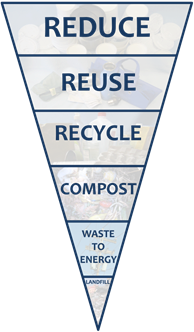
Deconstruction Supports Maine’s Waste Management Hierarchy
Debris from buildings is the largest source of waste both in Maine and in the US. Transitioning from demolition to deconstruction at the end of a building’s use can greatly reduce waste and enables the reuse of building materials, furnishings and architectural components, supporting a circular economy.
To learn more or join, contact Megan Mansfield-Pryor (207) 215-7535.